Victoire Alice Marie
Paillard
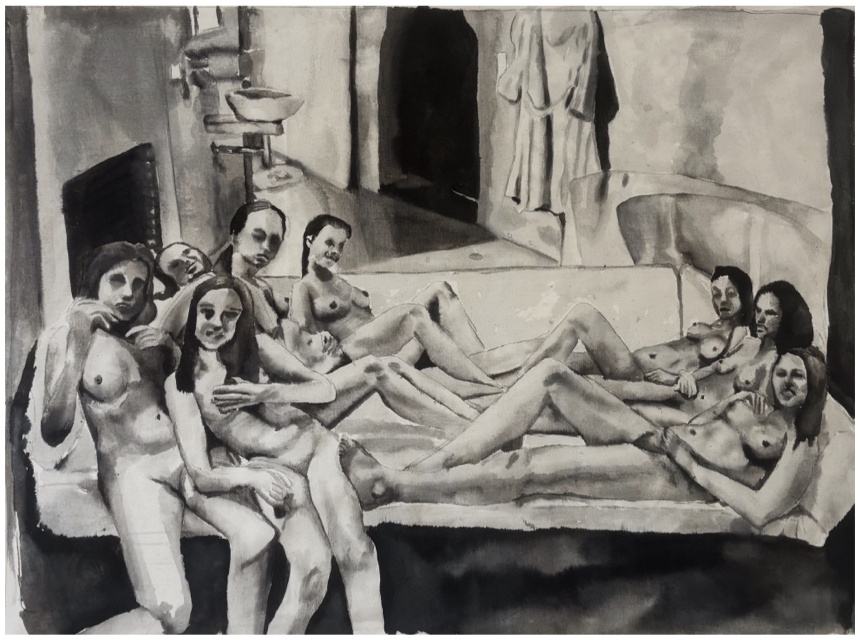
My practice surrounds observation, observing myself, situations around me as well as when I become aware I am being observed myself. I work autobiographically, in the sense that I don’t think of my paintings as self-portraits, but rather as fragments of my life that frames the scenes in my paintings.
Ink
Selected worksPaintings
Selected worksOthers
Mixed media and works on paperExhibitions
Statement
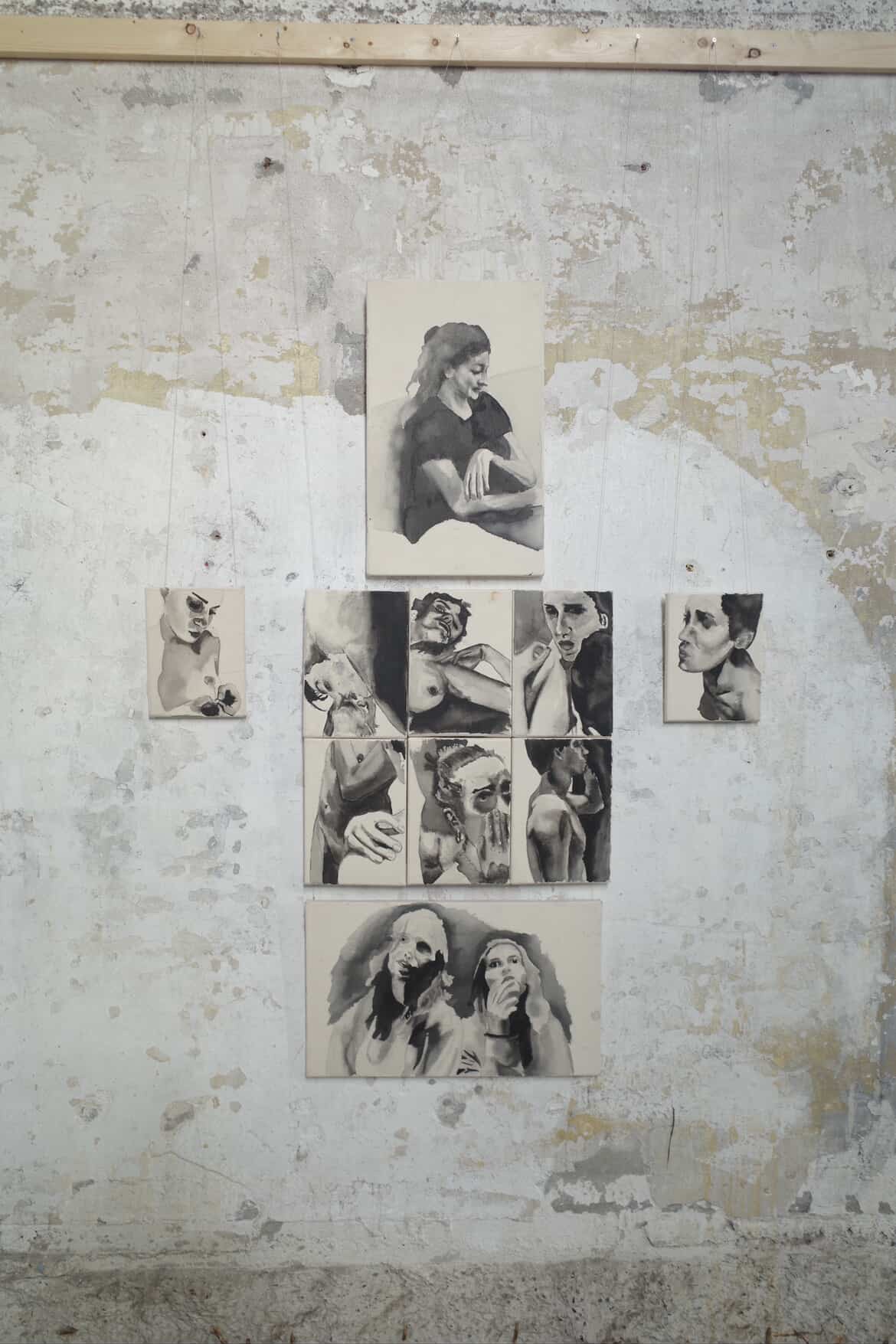
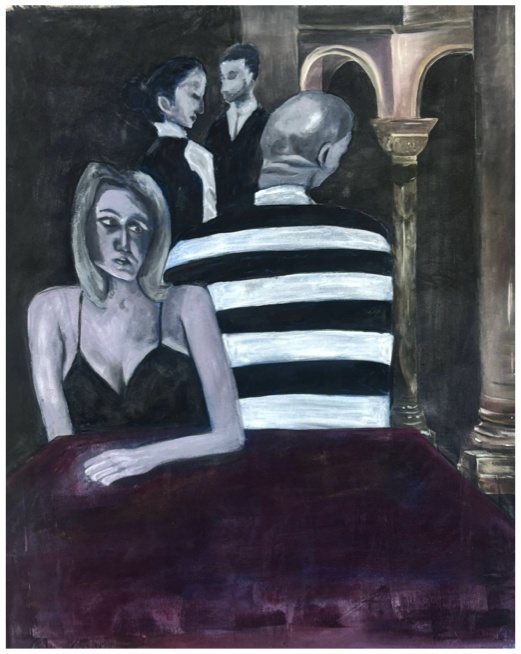
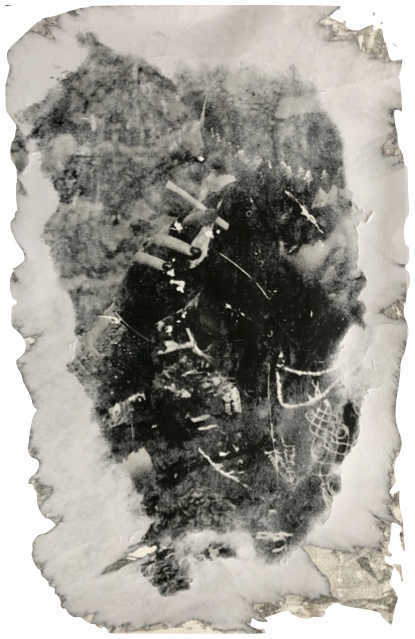
My practice surrounds observation, observing myself, situations around me as well as when I become aware I am being observed myself. I work autobiographically, in the sense that I don’t think of my paintings as self-portraits, but rather as fragments of my life that frames the scenes in my paintings. Many of my images begin as collages of photographs of myself and everyday objects. I then translate the digital image into a painting. I work mainly with ink, and I use excessive amounts of water allowing the ink to spread and dissolve, this enables me to erase shape and the image. I then use a cloth to rub away the excess water, leaving behind unpredicted marks. I paint on my dinner table allowing remedies of drinks to stain the work. I like the idea that the paintings are set in the time I made them.
The naked body often appears in my work. The naked body confronting, vulnerable, and impossible to ignore. I am interested in the human instinct to gaze at something intimate, forbidden, or uncomfortable. The same impulse of curiosity that occurs when we look at an accident, even when it disturbs us. My work has the same energy, where the intensity of observation is present, however in my work the scene appears more quiet, more intimate. An everyday moment can become uncomfortable simply by looking at it for too long. I use moments of my own life to create the scene, where the work moves between actual situations and fiction. The figures are situated in spaces from memory, imagined, or spaces I find online.
I am interested in the spaces between self-examination and being observed, diary and fiction, intimacy and voyeurism. Presenting these moments, I confront the viewer with themselves. I want the viewer to become aware of their own gaze, and how their assumptions, experiences, and desires shape the way they interpret a body. I often let the body remain anonymous, allowing posture, gesture, and surroundings to speak in place of identity. The room can become as much of a portrait as the body itself.